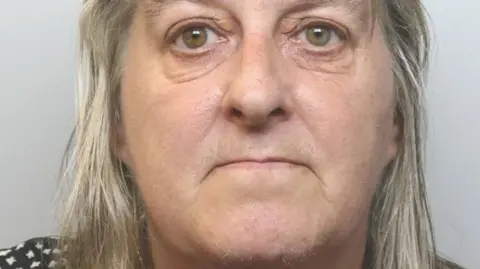
A woman who called on Facebook for a mosque to “be blown up with the adults inside” has been jailed for 15 months.
Julie Sweeney, 53, of Cheshire, admitted a charge of sending a communication threatening death or serious harm, when she appeared at Chester Crown Court.
Sweeney, from Church Lawton near Alsager, posted the comment after riots flared across England in the wake of the killings of three young girls in Southport, last month.
The court heard she was responding to an online post picturing people helping to repair the mosque in Southport after it was damaged during violent disorder that followed the stabbings.
The court was told Sweeney wrote: “It’s absolutely ridiculous. Don’t protect the mosque. Blow the mosque up with the adults in it.”
She was one of a number of people appearing in courts across England on Wednesday following widespread riots.
Among those cases were:
In Sweeney’s case, the prosecution told the court the Facebook group she posted in usually carries items about local events and lost and found items, and has just over 5000 members.
Sarah Badrawy, prosecuting, accepted Sweeney’s post was made out of anger, not because of racism, and was reckless rather than genuinely intended to put people in fear.
John Keane, for the defence, argued his client was the primary carer for her husband, and had lived a “quiet, sheltered life in Cheshire”.
Sweeney had never been in trouble before and was genuinely remorseful, Mr Keane added.
As he jailed her, Judge Stephen Everett said: “You should have looked at the news with horror, like right minded people.
“Instead, you chose to take part in stirring up hatred. It was a truly terrible threat.”
The judge said no-one had suggested Sweeney would have taken part in any violence, but “so called keyboard warriors like her, have to learn to take responsibility for their inflammatory and disgusting language”.
Sweeney wiped away tears as she was jailed and said “thank you, your honour”, before she was taken down.
Following the hearing, Cheshire Police said people may think posting hateful messages on social media offered them some sort of anonymity, but they were wrong.
“As this case demonstrates, there is nowhere to hide,” said a spokesperson.